
Platelet – Rich Plasma (PRP)
Stimulate Tissues. Accelerates Healing.
Hair loss can be a frustrating experience, but several innovative treatments are available to help manage and reverse it. One such treatment that has been gaining attention in recent years is Platelet-Rich Plasma (PRP) therapy. This procedure uses your body’s own blood to promote hair growth and improve the overall health of your hair follicles. Let’s take a closer look at how PRP works, its benefits, and what you can expect from the treatment.
What is PRP?
Platelet-Rich Plasma (PRP) therapy involves using a concentrated form of your own blood, which is rich in platelets and growth factors that are naturally involved in tissue repair and healing. The process begins with a simple blood draw, after which the blood is placed into a machine called a centrifuge. The centrifuge spins the blood at high speeds, separating the platelets from other blood components and resulting in a concentrated plasma solution.
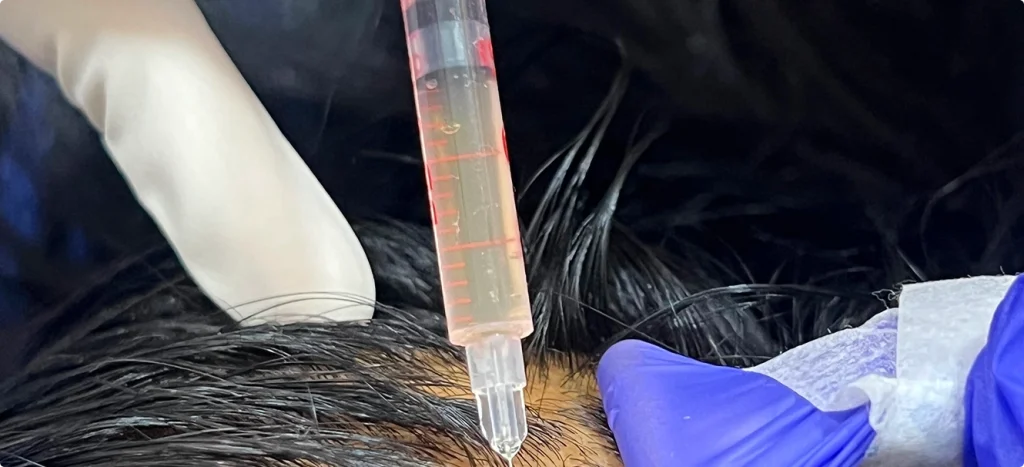
This platelet-rich plasma is then injected into the scalp, specifically targeting areas where hair is thinning or lost. The growth factors in the PRP are believed to stimulate hair follicles, promote new hair growth, and improve the overall density of the hair.
How does PRP work for Hair Loss?
PRP works by utilizing the growth factors found in platelets to promote healing and rejuvenation. When injected into the scalp, PRP is thought to:
- Stimulate Hair Follicles:The growth factors encourage dormant or miniaturized hair follicles to become active again, leading to hair regrowth.
- Increase Blood Flow to the Scalp:The growth factors can improve scalp circulation, providing hair follicles with the nutrients they need to thrive.
- Strengthen Existing Hair:PRP can help strengthen existing hair strands, reducing hair breakage and promoting healthier hair overall.
- Reduce Inflammation:By reducing inflammation in the scalp, PRP therapy helps create a healthier environment for hair follicles to grow.
HAIR TREATMENT FAQ
Early intervention is key. The sooner treatment begins, the higher the chances of preserving hair density and slowing progression.
Most patients experience only mild discomfort. A numbing technique is used to make the procedure comfortable.
The number of sessions varies depending on the stage of hair loss. Typically, an initial series is followed by maintenance treatments.
Exosome therapy is an advanced regenerative treatment that supports follicle repair, reduces inflammation, and promotes hair longevity. It is recommended based on clinical evaluation.
In early and moderate stages, regenerative therapies may delay or reduce the need for surgery. In advanced cases, they can improve transplant outcomes.